
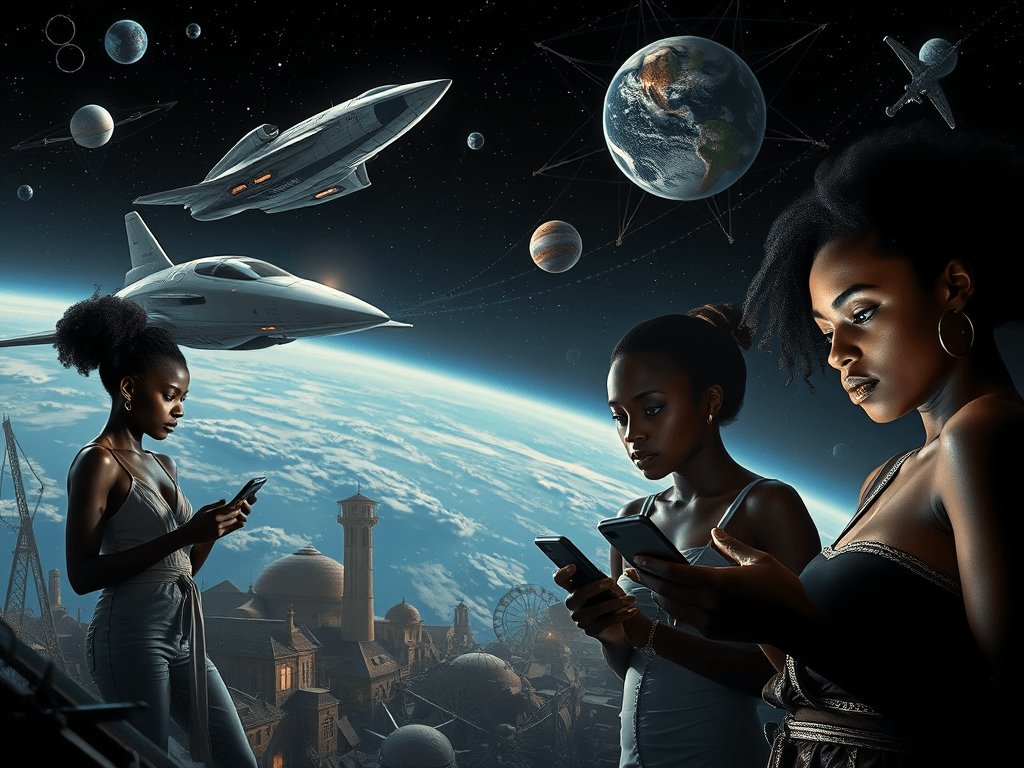

In a year already heavy with geopolitical shocks, economic tremors, and moral reckonings, the veneer of optimism, shiny rockets, luxury fakes, and trending TikToks seems more like smoke and mirrors than actual progress. As billionaires play spacemen, misinformation spreads faster than truth, the Vatican faces a leadership void, and inflation bites harder than ever, one can’t help but ask: are we watching the slow unraveling of the systems we once trusted?
Space Cowboys or Spectacle Peddlers?
Once considered the final frontier for human exploration and scientific advancement, space has now become a billionaire’s playground. Elon Musk, Jeff Bezos, and Richard Branson have all embarked on headline-grabbing journeys beyond Earth, excursions that have raised eyebrows more for their theatricality than their substance. Despite being marketed as historic leaps for humanity, these suborbital flights barely scratch the edge of outer space, often lingering for mere minutes in weightlessness before descending.
What’s more alarming is the PR packaging. These ventures have been sold as innovations with global benefits, zero-gravity research, sustainable propulsion, and interplanetary colonisation. In truth, they’re elite joyrides. With ticket prices soaring into the hundreds of thousands, there is little pretence that these escapades are inclusive or necessary. Meanwhile, back on Earth, basic infrastructure in many parts of the world remains in disrepair, healthcare systems are strained, and environmental degradation continues at a frightening pace.
The optics are undeniable: the ultra-wealthy are literally escaping a planet they helped scorch.
The TikTok Tariff Trap: Designer Lies from Shenzhen to Your Feed
Donald Trump’s presidency introduced sweeping tariffs on Chinese imports, intending to pressure China on trade practices. While the long-term impacts are still being analyzed, one immediate and unexpected consequence was a dramatic increase in “factory direct” marketing, especially on TikTok and other short-form video platforms.
These videos, often posted by seemingly young, relatable factory workers or entrepreneurs in Chinese cities like Guangzhou or Shenzhen, claim to manufacture the very same luxury items sold by brands like Chanel, Gucci, and Dior – for a fraction of the cost. They tout “1:1 quality,” often hinting, without proof, that they produce items for the luxury houses themselves. This trend has fed the explosion of designer dupes, encouraging consumers to question the legitimacy of luxury pricing altogether.
The reality? It’s murky. Some of these factories may produce raw materials or work with licensed intermediaries. But the leap from “same factory” to “same quality” is a carefully crafted myth. Meanwhile, Western consumers squeezed by inflation and disillusioned by corporate greed, are increasingly buying into the fantasy of a luxury lifestyle at a cut-rate price. It’s a potent mix of economic desperation, digital misinformation, and post-capitalist nihilism.
The Death of Pope Francis: A Church at a Crossroads
Perhaps the most spiritually seismic event of the year has been the death of Pope Francis; a pontiff who, for all his controversies, was a symbol of progressive reform within one of the world’s oldest and most rigid institutions. His passing has not only left a spiritual void but also exposed deep ideological fractures within the Catholic Church.
Francis was outspoken on climate change, LGBTQ+ rights, capitalism’s excesses, and the refugee crisis. But he also faced intense resistance from conservative factions within the Church, especially in the U.S. and parts of Europe. With his death, the question now looms: will the next pope continue his reformist legacy, or will the Church recoil into conservatism?
Speculation is already rife about who the next pontiff will be, with candidates ranging from African cardinals pushing for global inclusivity to European traditionalists calling for a return to doctrinal rigidity. In a time when the Church is losing followers globally and facing credibility crises due to abuse scandals, its future hangs in the balance.
The Global Recession That No One Wants to Admit
Despite reassurances from world leaders and central banks, the signs of a global recession are no longer subtle they’re screaming. Inflation has continued to rise in major economies, wages have stagnated, and housing markets are teetering on collapse in countries like the UK, Canada, and China.
In developing economies, the situation is worse. Debt crises are spreading across Africa and South America. Food insecurity is rising. Climate-related disasters: droughts, floods, wildfires, are devastating communities without the infrastructure to recover. And yet, media cycles remain fixated on celebrity gossip, AI apps, and viral fashion trends. The delusion of abundance persists while reality tells a different story.
The IMF has warned of a “slow-motion crisis,” yet the response from policymakers has been fragmented at best. Fiscal tightening, rather than stimulus or investment in essential infrastructure, remains the dominant narrative. We are collectively hurtling toward austerity in an already brittle world.
The Age of Distraction
What ties all these threads together is a simple, chilling truth: we are being distracted. The space missions, the fake luxury goods, the aestheticisation of politics and religion, all of it keeps us scrolling, shopping, and spectating instead of organising, questioning, and changing.
We live in a time where misinformation thrives, where wealth is weaponised to create illusions, and where even our spiritual anchors are under strain. The “billionaires in space” headline feels like a metaphor for everything else; an elite class untethered from consequence, ascending above a planet on fire.
As the world reels from crisis to crisis, perhaps the most radical act is to pause, resist the performance, and start asking harder questions.
Discover more from Chaud: The Magazine
Subscribe to get the latest posts sent to your email.
 Chaud: The Magazine
This thought-provoking piece highlights how modern distractions—like space missions, luxury goods, and politics—keep us from addressing real issues. It often feels like we are living in 2 different realities with wealthy elite disconnected from the struggles of the rest of us. I love this encouragement to pause, resist these distractions, and start asking tough questions instead of just scrolling and watching. Thank you Author!
Thank you Chaud editor for this piece! It really hits on the disconnect between flashy progress and the deeper issues we’re facing. The idea that billionaire space projects and TikTok “luxury” culture are just distractions feels spot-on. like we’re being sold dreams while real problems get worse. And the part about the Church at a crossroads shows how even old institutions are struggling to stay relevant. It’s a powerful reminder to look past the hype and pay attention to what actually matters. Something Chaud consistently reminds us to do. This was a masterclass piece!