
As we settle into 2026, it’s clear we’re living through one of the most rapid technological inflection points in modern history. Artificial intelligence once a speculative force on the periphery of science fiction and tech labs has become a central driver of economic strategy, creative expression, and societal debate.
But this year is shaping up to be more pivotal than many anticipated. While AI is unlocking remarkable innovations across industries, it’s also exposing fractures in governance, ethics, authenticity, and human dignity problems that authorities, creators, brands and citizens alike cannot afford to ignore.
Where AI Is Making Real Progress
Technology & Infrastructure
AI’s integration into the digital infrastructure of 2026 isn’t incremental it’s foundational. Enterprise systems across cloud computing, cybersecurity, and data platforms are pivoting to AI-native architectures, emphasising “agentic AI” systems that perform multi-step tasks autonomously across applications and intelligent orchestration rather than mere automation. Companies are realigning budgets from traditional software to AI integration, signaling a shift in ROI priorities in enterprise tech.
This means faster code analysis, smarter networks, adaptive cybersecurity, and more responsive platforms but also increased complexity. Without robust governance and auditing systems, AI’s autonomous decision-making can lead to unpredictable outcomes.
Healthcare: Innovation With Guardrails
Artificial intelligence in medicine is no longer a futuristic vision it’s part of the everyday workflow. In 2026 we expect:
- AI-assisted diagnostics that support physicians by analysing imaging and historical patient data with high accuracy.
- Drug discovery acceleration and predictive biological modeling using AI to simulate trial outcomes.
- Digital twin models of patients for personalised treatment optimisation.
- AI compliance and regulation systems that help governments monitor safety and bias in AI tools.
But this transformation arrives with hard lessons. The use of AI in aggregating and analysing health data raises privacy risks; poorly trained or biased models can misdiagnose or overlook critical contextual cues; and smaller providers struggle with the cost of adoption.
A Guardian investigation in early 2026 even forced Google to retract certain health-oriented AI summaries after they gave dangerously inaccurate guidance a stark reminder that unverified AI outputs, when applied to human health, can be harmful.
In healthcare, AI should be a co-pilot not a replacement because the complexity of human biology, ethics and compassion cannot be reduced to an algorithm.
Media, Authenticity and Trust
Generative AI is reshaping media creation from automated news summaries to synthetic audio and video. But this democratisation of content creation carries a darker side.
Deepfakes, which were once technical curiosities, are now commercially accessible and frighteningly convincing. In 2026, deepfakes are expected to become mainstream threats not just to reputations but to national security, political stability and personal safety. Spending on detection and verification tools is expected to soar as organisations scramble to authenticate content.
The implications are serious:
- Personal harm: Violations of consent, reputation damage, and the psychological trauma inflicted by manipulated intimate imagery are real and on the rise.
- Public trust erosion: When audiences cannot distinguish real from synthetic, the very foundation of journalism, documentary, and eyewitness testimony unravels.
- Brand risk: Without clear disclosure, AI-generated spokespersons or endorsements can expose companies to backlash and legal liability.
In response, governments like South Korea are pioneering comprehensive AI law frameworks including mandatory watermarking of AI-generated content and safety assessments for high-impact applications though not without criticism from startups that find such regulation burdensome.
Economic & Workforce Shifts
AI’s automation capabilities are reshaping labor markets. Tasks once processed by humans analysis, transcription, content generation are increasingly automated, raising concerns about job displacement, especially at entry levels.
Yet, AI also creates new roles: from model auditors and data ethicists to hybrid creative technologists who blend domain expertise with AI fluency. The challenge lies not in stopping AI that’s neither realistic nor beneficial but in re-skilling and redefining work so humans and machines complement rather than compete with one another.
To navigate this transition sustainably, businesses and policymakers must invest in education, continuous training, and safety nets for workers transitioning across sectors.
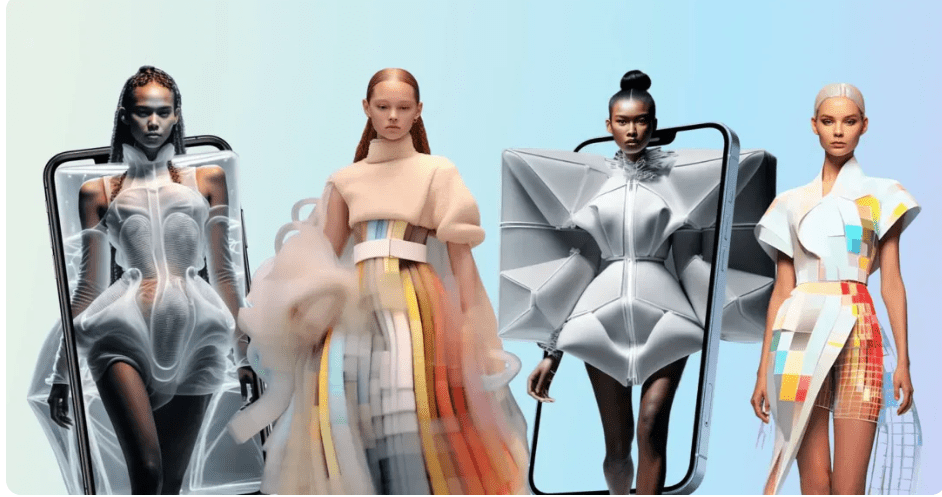
AI in Fashion, Beauty and Lifestyle
Consumer industries such as fashion and beauty are leveraging AI to enhance personalisation and supply chain efficiency:
- AI in design and trend analysis accelerates creative processes, suggesting forms and palettes, and helping brands optimize inventory.
- Virtual try-on and sizing tools powered by AI are reducing returns and improving e-commerce experiences.
- Smart recommendation engines tailor product suggestions based on user data.
But here’s where the story gets complicated.
The use of AI avatars as brand ambassadors particularly when positioned as “diverse voices” is growing. Platforms and lifestyle publishers, in pursuit of optimised engagement metrics and market segmentation, are increasingly deploying synthetic personas instead of collaborating with real humans from those backgrounds. This trend might seem like diversity at scale but it’s a hollow substitute.
The Harm in Synthetic “Diversity”
Deploying AI creators to represent diverse identities without real lived experience has implications:
- It commodifies identity, turning cultural expression into algorithmic content devoid of context or nuance.
- It erodes employment opportunities for real creators from underrepresented groups, who already face barriers to entry in media and fashion.
- It risks further misrepresentation and tokenism, because AI models can’t authentically capture the lived experience that shapes voice, perspective, and narrative truth.
In chasing efficiency or “safe” brand images, companies risk substituting authenticity with polished but hollow simulations and audiences are increasingly savvy enough to notice.
Authenticity in storytelling, influence, and representation still demands real people especially in spaces where texture, nuance, and embodied experience matter.
Beauty and Wellness Tech: Promise With Caution
AI is also transforming beauty and skincare, from personalised routine recommendations to AR-powered trial experiences. These tools can democratise access to personalised insights and reduce waste but they are only as good as the data and the ethical frameworks behind them.
Poor models can perpetuate biased beauty standards or reinforce exclusionary definitions of attractiveness. Unlike human experts, dermatologists, aestheticians, chemists AI lacks the judgment to balance cultural sensitivity, safety, and individuality.
Human expertise remains indispensable.
The Undercurrents: Regulation, Ethics and AI Psychosis
Urgent Need for Regulatory Frameworks
Across the globe, regulators are scrambling to keep pace with technological innovation. The absence of harmonized international standards creates fractured enforcement and loopholes that bad actors can exploit.
The European Union, parts of Asia, and pockets of the U.S. have introduced nascent frameworks, but:
- Accountability remains murky: Who is liable when AI makes harmful decisions – developers, deployers, or the AI itself?
- Transparency is lacking: Most AI systems are “black boxes” with little explainability or auditability.
- Cross-border governance is fragmented: Without shared standards, enforcement and protection vary wildly by jurisdiction.
2026 may well be the year the world confronts these questions head-on not out of convenience, but necessity.
AI Psychosis and Cognitive Risk
An emerging psychological concern is what some mental health professionals describe as AI psychosis a phenomenon where prolonged interaction with AI, especially extroverted or personalised agents, blurs the line between human feedback and synthetic responses.
People may begin to:
- Treat AI as a substitute for human relationships.
- Internalize AI feedback without critical judgment.
- Develop distorted expectations of social reciprocity.
This risk isn’t fringe. Immersion in synthetic social environments especially with personalised AI interlocutors can alter perception, emotional regulation, and social learning patterns. Human connection, empathy and accountability cannot be outsourced to an algorithm.
The Central Paradox of 2026
Here’s the core truth: AI is transformative and indispensable but it is neither infallible nor a replacement for human creativity, wisdom, judgment, and care.
For every medical breakthrough powered by algorithmic insights, there’s a cautionary tale about privacy and bias. For every fashion brand accelerating design with generative models, there’s an ethical debate about authenticity and worker displacement.
In media and culture, for every compelling piece of AI-generated art, there’s the looming threat of deepfakes undermining truth and trust.
The future we’re building isn’t binary. It’s a hybrid world where:
- AI accelerates what humans can do.
- Humans define what AI should do.
And that responsibility – ethical, legal, cultural rests with people.
Conclusion: 2026 and Beyond
As 2026 unfolds, AI will continue to push boundaries from smarter hospitals to more responsive fashion supply chains; from cinematic media to personalised beauty tech.
But the reality is this: tools don’t define culture, people do. AI amplifies capacity, but it also amplifies risk. How we handle deepfakes, synthetic representation, ethics, psychosis and regulation will shape whether 2026 is remembered as a golden age of human-machine harmony or a cautionary chapter in technological hubris.
Authenticity, accountability and human expertise not algorithms alone remain the anchors of progress.
This is not a future to fear, but a future to steward responsibly.
Discover more from Chaud: The Magazine
Subscribe to get the latest posts sent to your email.
 Chaud: The Magazine
One thought on “The AI Epoch: What 2026 Means for Tech, Medicine, Media, Fashion, Beauty and Culture”