
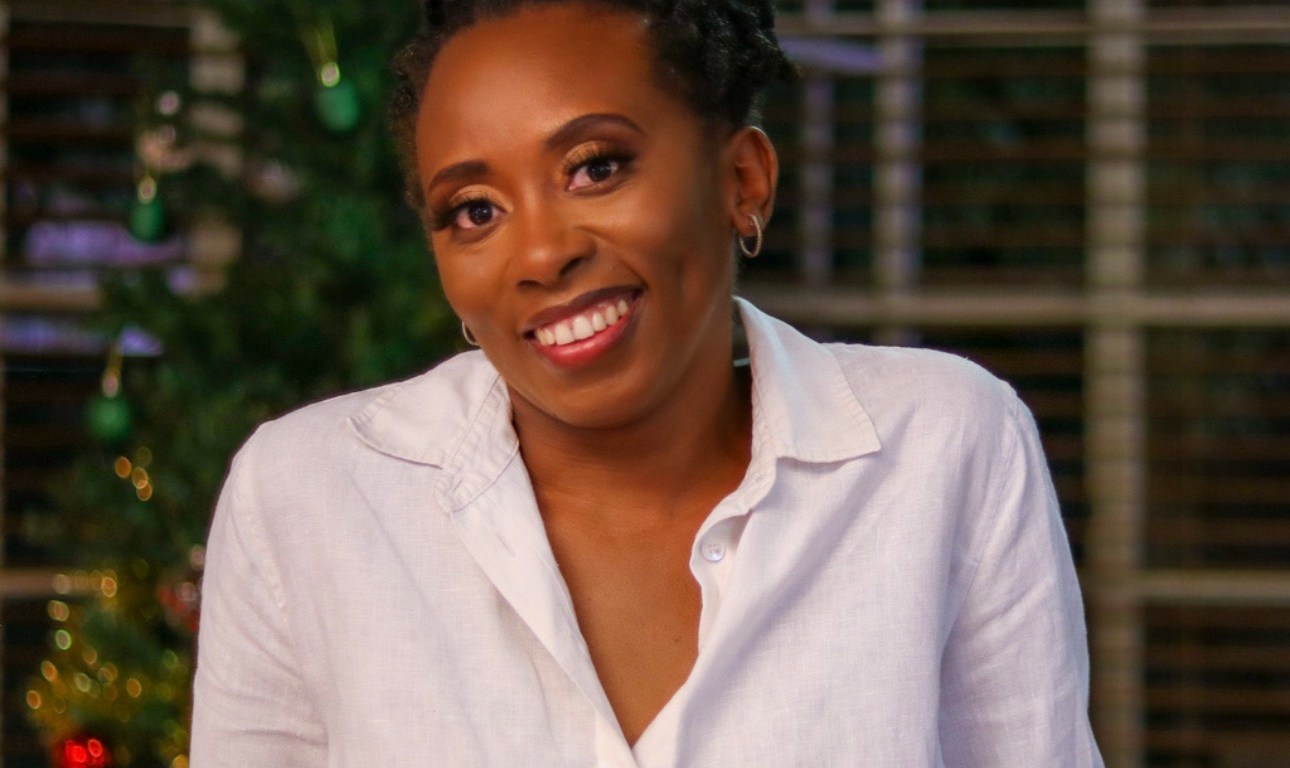

When I first met Tendayi almost 20 years ago, the first thing I noticed was her unbridled joy and light. When she told me that she had cancer, I foolishly thought that it would be taken from us. Boy, was I wrong. Her laughter continues to fill a room. Her words always dance between humour and wisdom. She’s a health economist whose life’s work revolves around helping others get access to care even as she fights for her own.
She’s also a mother of two girls, a sister, a daughter, A wife, an aunt, a friend, and a woman of deep faith.
Twice in her life, Tendayi has faced what she calls cancer. The second time, it returned, spreading to her lungs and liver. Yet she meets it not with fear, but with faith, fierce honesty, and an unwavering sense of self.
“Outside of the Big C, I don’t think I knew who I was,” Tendayi admits with a smile. “But I’m getting to know myself a little bit more now because I’ve made room for me for my voice. She’s awake now. She’s loud.”
Throughout our 20-year friendship, that voice- thoughtful, funny, and unfiltered, has always been there. But she says this season of life has reminded her that she can be her full self, everywhere. “She doesn’t have to be meaningful in one room and strong in another,” she says. “She can just be.”
Faith, the constant companion
Tendayi’s relationship with God is at the centre of everything. “My faith isn’t performative,” she says. “I’m just living it. Without Jehovah, I wouldn’t be able to go for the tests, see the silver linings, or even get out of bed some days.”
There’s a children’s book that has become a quiet anthem in her heart: You can’t go over it, can’t go under it, you have to go through it.
“That’s my life,” she explains. “Whatever comes, I have to go through it. And God goes through it with me.”
She smiles again. “Joy comes in the morning. It may not be 100 percent joy, but it’s always a change and that’s enough.”
The work that gives her purpose
Tendayi works with an organisation that brings clinical trials to Africa. “It’s an exciting initiative to be part of,” she says. “We look at cost, impact, and the patient experience not just financially, but what it does to households and communities.”
Her training as a health economist has shaped her perspective on both life and illness. “I’ve learned that preparation matters. Have medical aid. Have savings. Get checked. Don’t wait until it’s too late,” she says firmly. “Taking care of yourself isn’t selfish, it’s love.”
Facing the diagnosis and the return
When Tendayi first heard the word “cancer,” she laughed. “It’s not a big C,” she remembers saying. “It’s just a C.”
Later, she cried not for herself, but for her family. “I thought about what it would mean for them not to have me,” she recalls softly. “But I’m not wired to think the worst. I needed an answer, and now I had one. And when you have an answer, you can find a cure, or at least a way forward.”
That calm, pragmatic courage defines her. “I don’t see cancer as something hanging over me,” she says. “It’s within me, but it doesn’t define me.”
Motherhood, memory, and meaning
Being a mother gives her greatest strength. “My girls are my reason,” she says, eyes shining. “I can’t not get better, because they’ll come sit by my bed and say, ‘Are you done yet? Wrap it up, babes.’”
She laughs, then adds quietly, “I want them to know that everything is something you can learn through. Life can be beautiful and hard and living through both is what makes it full.”
Her hope for her daughters is simple: “That they never forget who they are. People can only reinforce what you already know about yourself. So know who you are and hold on to that.”
The power of community
Tendayi is the kind of friend who remembers everyone’s name, checks in, and holds space for others. “Community,” she says, “is drop-offs, pick-ups, laughing, talking, planning, showing up. It’s people who see you and stay.”
She’s spent years doing the work of connection and now, that same community rallies around her. “If I needed to raise funds or bring people together, it wouldn’t be hard,” she says. As someone who views her from the sidelines. I know it’s because she has done the work. I have community. I have people who care.”
Choosing joy, every day
Despite the fatigue, the side effects, the difficult days, Tendayi continues to choose joy – sometimes in small, quiet ways. Music, laughter, a good snack, a hot cup of tea.
“Even when I’m tired,” she says, “I remind myself that tomorrow is a new day. You can feel your body changing, healing. That’s enough reason to smile.”
Tendayi’s story is not one of tragedy; it’s one of triumph in its purest form, the triumph of presence, faith, and love.
“I’ve learned,” she says finally, “that you don’t always have to be strong. You just have to keep going through it.”
Discover more from Chaud: The Magazine
Subscribe to get the latest posts sent to your email.
 Chaud: The Magazine