
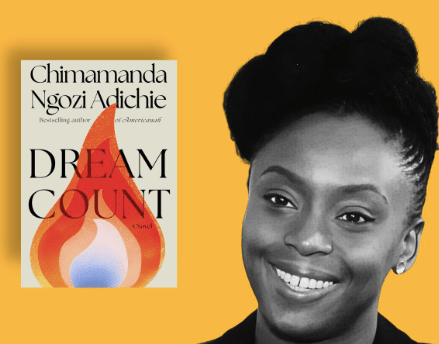
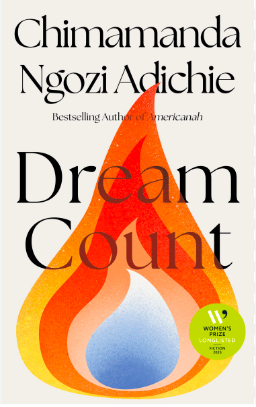
Chimamanda Ngozi Adichie’s long-awaited return to fiction, Dream Count, arrives as an ambitious, deeply personal exploration of grief, identity, and female friendship. But while the novel bears many of Adichie’s literary trademarks, beautifully crafted sentences, searing social commentary, and a raw emotional core, it is ultimately weighed down by excessive verbosity and an overwhelming bleakness that makes it a challenging, and at times exhausting, read.
A Story of Grief and Unfulfilled Dreams
At the heart of Dream Count is the friendship between four African women; Chiamaka (Chia), Zikora, Omelogor, and Kadiatou, whose lives unfold between Nigeria and the United States. Each woman carries her own burdens: Chia, a journalist in Lagos, struggles with career stagnation and an emotionally unavailable partner; Zikora, a lawyer in Washington D.C., is reeling from single motherhood and the deep wounds of familial estrangement; Omelogor, a Nigerian professor in London, is haunted by an abusive past and self-destructive tendencies; and Kadiatou, a Senegalese entrepreneur, wrestles with the slow unraveling of a seemingly perfect marriage.
What ties these women together is not just friendship but shared sorrow—whether it’s the loss of a loved one, the death of a dream, or the slow erosion of hope. Adichie, who has spoken openly about grief following the loss of her parents, pours this personal pain into Dream Count. The novel is saturated with mourning, not only for the dead but for the living who feel trapped by their pasts. The women find solace in each other’s company, yet their interactions often feel more like therapy sessions than organic conversations.
The Weight of Words
One of the most noticeable aspects of Dream Count is its length and not in a way that feels necessary. At over 500 pages, the novel stretches its themes to the point of exhaustion. Adichie’s writing, known for its elegance and clarity, becomes dense and meandering here. Long stretches of dialogue read like philosophical essays rather than conversations, and the internal monologues are so extensive that they slow the pacing to a crawl.
While some readers may appreciate the depth, others will find the prose suffocating. There is an overwhelming sense of repetition, as the same themes regret, grief, alienation, are revisited with slightly different variations, making the book feel longer than it needs to be. Some sections could have benefited from tighter editing, allowing the emotional weight of the story to land more effectively rather than drowning in excessive exposition.
A Mood of Relentless Darkness
Adichie has never shied away from difficult themes, but Dream Count leans so heavily into sorrow that it risks alienating its audience. Unlike her earlier works, which balanced pain with humor, love, and moments of lightness, this novel is unrelentingly grim. The characters rarely find relief, and even when they do, it feels fleeting.
This darkness is not just in the themes but in the atmosphere of the book itself. The settings: Lagos, Washington D.C., London, are described in ways that make them feel cold and inhospitable. Relationships, whether romantic or platonic, are fragile and often disappointing. The result is a novel that, while emotionally powerful, can be difficult to endure.
Final Verdict
Dream Count is a bold, deeply introspective novel that speaks to the reality of grief and the complexity of female friendships. It is a book that demands patience and emotional resilience from its readers. While Adichie’s prose remains compelling, the novel’s excessive length and relentless sadness make it a difficult book to truly enjoy.
For readers who connect with deeply introspective and sorrow-laden narratives, Dream Count may resonate. But for those seeking a more balanced or engaging literary experience, this novel may prove frustrating.
Rating: 2.5/7
Discover more from Chaud: The Magazine
Subscribe to get the latest posts sent to your email.
 Chaud: The Magazine