
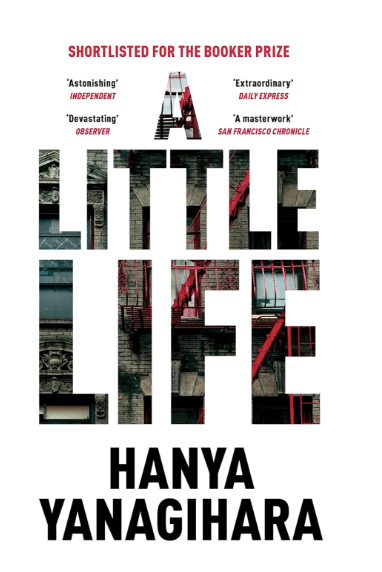
In the world of contemporary literature, there are few novels that cut so unflinchingly deep as A Little Life by Hanya Yanagihara. This novel, a finalist for the Booker Prize and the National Book Award, has become a touchstone for readers interested in the profound complexities of trauma, love, and the human capacity for resilience. At over 700 pages, Yanagihara’s work is an immersive and, at times, punishing read, a story that lays bare both the tenderness and brutality of existence with an honesty that is rare in fiction.
A Plot Defined by Friendship and Suffering
At its heart, A Little Life is about the intertwined lives of four friends living in New York City: Willem, an actor; JB, an artist; Malcolm, an architect; and Jude, a lawyer with a traumatic past that shadows every aspect of his life. Though the narrative technically encompasses all four men, it quickly becomes clear that Jude is the axis around which the story revolves. While the others face their own battles with identity, success, and failure, it is Jude’s dark and harrowing journey that drives the emotional core of the novel.
Yanagihara structures the novel in a way that layers Jude’s past over his present, revealing his history in pieces that are as traumatizing to the reader as they are to Jude himself. This technique invites readers to gradually understand the depth of Jude’s suffering, creating a slow-burn tension that demands intense emotional engagement. Each revelation of Jude’s life feels like an emotional punch, and Yanagihara does not allow the reader to flinch from his pain. By pulling readers into Jude’s perspective, she places them in the agonizing position of both empathizing with him and feeling utterly helpless in the face of his unrelenting suffering.
An Exploration of Trauma and Survival
The depiction of Jude’s trauma, which includes unspeakable abuse from his childhood, is one of the most divisive aspects of the book. Yanagihara has been both lauded and criticized for how far she takes Jude’s suffering. Some argue that the relentlessness of his pain borders on gratuitous, making readers question whether such intensity is necessary to convey the impact of trauma. However, others see this as a bold and necessary approach. Yanagihara’s unfiltered portrayal doesn’t glamorize or sentimentalize trauma but rather reveals its horrific, ongoing reality, one that affects survivors in both visible and invisible ways for a lifetime.
Jude’s trauma manifests in self-harm and a profoundly diminished sense of self-worth. Yanagihara’s prose is both sensitive and unsparing here; the way she writes about Jude’s pain is one of the most striking and empathetic aspects of the novel. The story confronts the reader with the harsh truth that not all wounds can be healed and that sometimes, love alone cannot rescue a person from the depths of their pain. Yanagihara challenges the conventional redemption arc by presenting a more nuanced view of survival that doesn’t guarantee closure or relief, thereby upending traditional narratives of healing.
Love, Intimacy, and the Limits of Compassion
Despite the suffering, A Little Life is also a novel about love—friendship, found family, and romantic love—and how these bonds can be both comforting and fraught with their own complexities. Jude’s relationships with his friends, particularly with Willem, are a testament to the power of human connection to provide solace, even if it cannot erase the past. The unconditional love that Willem offers Jude is heartbreaking in its purity, especially as Willem struggles to understand the depths of Jude’s pain without ever truly being able to “save” him.
This raises questions about the limits of compassion. Yanagihara paints a stark picture of how love can sometimes be powerless against trauma. Through Jude and Willem’s relationship, she subtly explores the impossibility of being someone’s entire reason for survival. It’s a brutal realization that often love cannot mend what has been broken beyond repair. However, the loyalty and persistence of Jude’s friends also underscore the human capacity to stand by each other, even in moments of despair—a testament to the depth of true friendship and chosen family.
New York City as a Setting and a Symbol
Yanagihara’s New York is not the romanticized cityscape that often graces the pages of modern fiction. Instead, it is depicted as a harsh and unforgiving backdrop, a place that offers anonymity and reinvention but can also be isolating and alienating. The city functions almost as a secondary character, reflecting the harsh contrasts in the characters’ lives—between personal success and internal anguish, between the outward glamor of their careers and the darkness of their private struggles. The city is where they all come to achieve their dreams but also where they confront the parts of themselves that cannot be left behind.
An Emotional Challenge for the Reader
Reading A Little Life is an emotional ordeal. Yanagihara has crafted a story that demands more than casual engagement; it requires a full commitment to the rawness of her characters’ pain and the complexity of their relationships. The book’s length and depth of suffering make it a challenging read, and its graphic depictions of abuse and self-harm may make it unsuitable for some readers. However, for those willing to endure the emotional toll, A Little Life offers an experience unlike any other, one that lingers long after the final page is turned.
This is not a book to be read lightly. The effect of Yanagihara’s writing is almost claustrophobic, trapping readers within the often-painful intimacy of Jude’s thoughts. Her prose is precise and evocative, capturing the inner lives of her characters with a starkness that can feel unsettling. At the same time, she possesses an uncanny ability to capture small moments of beauty and tenderness amid the darkness, which keeps the novel from being unrelentingly bleak.
Conclusion: A Novel That Demands to Be Felt
A Little Life is both haunting and unforgettable—a novel that dares to expose the deepest, darkest corners of the human soul. It is not a book for everyone, nor does it aspire to be. Yanagihara has created something rare: a story that elicits intense, visceral reactions, that demands readers question their own capacity for empathy, and that refuses to provide easy answers or comforting resolutions. Her exploration of trauma and survival is relentless but deeply moving, a testament to the author’s courage in confronting the uncomfortable realities of human existence.
For those who choose to read it, A Little Life is more than a novel; it is an experience, one that resonates in the bones and stays in the mind long after closing the book. It challenges readers to sit with suffering, to appreciate the fragility of joy, and to understand that sometimes, the most profound expression of love is simply being present.
Discover more from Chaud: The Magazine
Subscribe to get the latest posts sent to your email.
 Chaud: The Magazine