
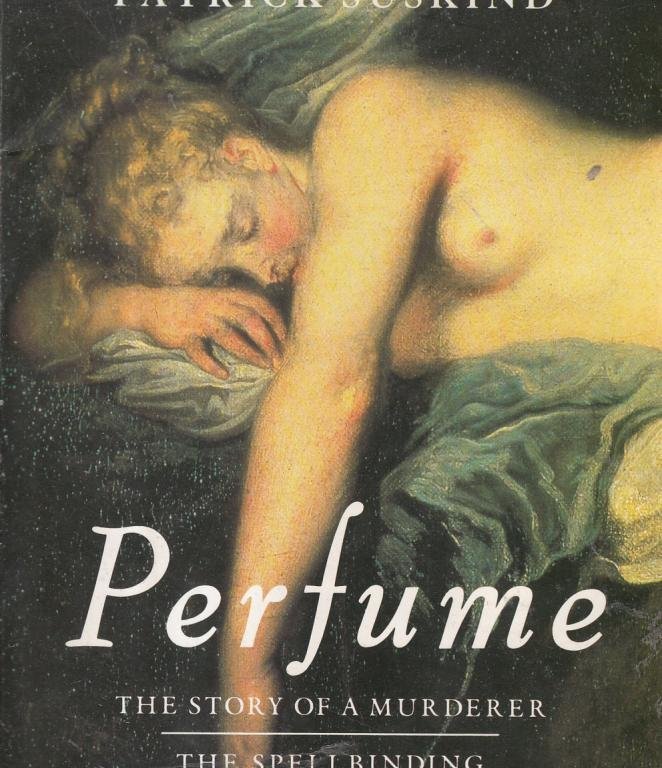
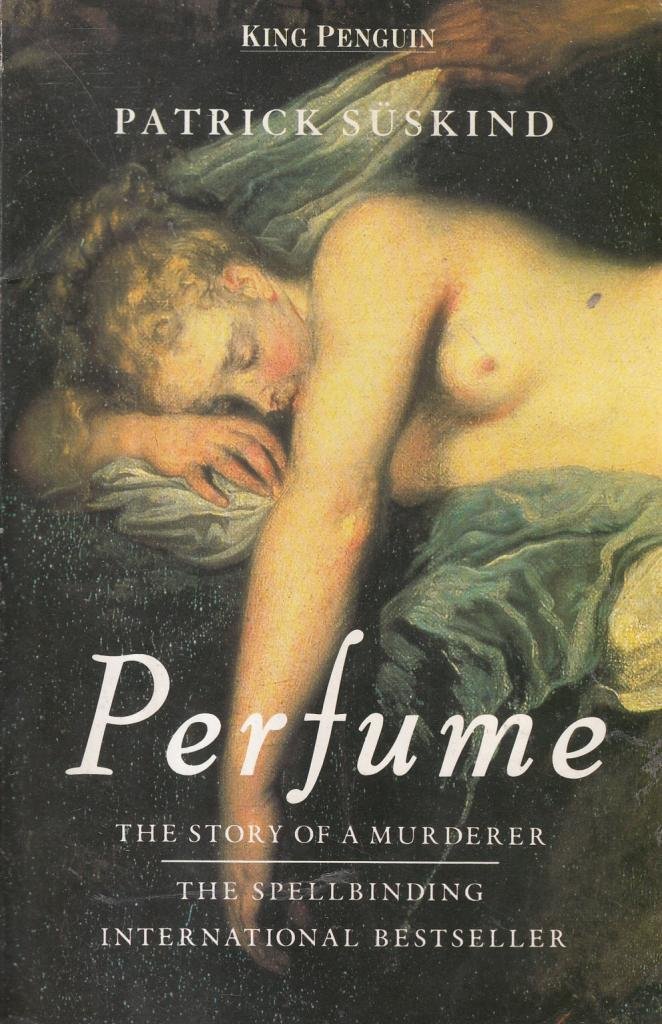
In Perfume: The Story of a Murderer, Patrick Süskind accomplishes the nearly impossible: he evokes the invisible, ephemeral world of scent with such precision and intensity that one might swear they can smell the pages. To read this novel as a perfume enthusiast is to become fully immersed in an olfactory narrative that borders on the hallucinatory, where fragrance is not just an accessory to the story, but its very lifeblood.
The novel traces the life of Jean-Baptiste Grenouille, an orphan born in the malodorous gutters of 18th-century Paris. Unlike the rest of humanity, Grenouille lacks a personal scent, rendering him an outsider, a ghost among men. But he possesses a terrifying gift: an unparalleled sense of smell. From the moment of his birth, his existence revolves around scent, and it is through his nose that he navigates a brutal, squalid world. Süskind’s Paris is not the city of light, but a place of fetid marketplaces, rotting meat, unwashed bodies, and overflowing sewage, a sensory assault that only heightens the extraordinary precision with which Grenouille perceives the rare and pure fragrances that draw him.
A World of Scent
Süskind writes with an exquisite attention to the nuances of scent, describing them with a kind of synesthetic poetry. Every chapter brims with olfactory detail, transporting readers into the perfumed landscape of 18th-century France. Early in the novel, we are introduced to the street vendors selling raw leather, the acrid tang of horse dung, and the sharp metallic stench of blood from butcher shops. These sensory depictions are so visceral that they almost cling to the skin.
As Grenouille matures, his world expands to include the more refined scents of rare flowers, herbs, and oils. In one particularly evocative scene, he is introduced to the craft of perfumery under the guidance of Baldini, a faded master perfumer in Paris. Here, we see the tension between traditional methods of perfume-making and Grenouille’s insatiable, almost otherworldly desire to push beyond convention. Baldini represents the structured art of perfume creation, an ancient craft rooted in formulas passed down through centuries, where scent is born from maceration, distillation, and enfleurage, the delicate art of extracting perfume from flowers using cold fat. Süskind’s attention to the technical details of perfume production reveals his deep understanding of the craft, creating a layered narrative that feels both educational and magical.
We learn through Baldini about the precision required to create harmonious fragrances: how oils from roses, jasmine, and lavender are blended to form the heart of a perfume, while citrus and neroli brighten the top notes, and the grounding earthiness of vetiver and patchouli form the base. But for Grenouille, this standard palette is insufficient. His genius lies in his ability to perceive the world through thousands of individual olfactory particles, each waiting to be captured and reassembled into something transcendent.
The Perfumer’s Quest
Grenouille’s journey takes him to Grasse, the historic capital of French perfume-making. Here, in the fertile fields of Provence, where lavender, tuberose, and orange blossom bloom in abundance, he becomes obsessed with capturing the essence of beauty itself. But this quest takes on a dark turn. Süskind illustrates the lengths to which Grenouille is willing to go in his pursuit: the murder of young women whose natural scent he deems perfect. He doesn’t desire their physical beauty, but rather the intangible, virginal fragrance they exude an odor of purity that he believes can be distilled into a perfume of unimaginable power.
The art of perfume-making becomes a perverse act of creation in Grenouille’s hands. His methods of enfleurage using animal fat to absorb the scent of a flower are distorted into something grotesque, as he uses human bodies to craft his masterpiece. The concept of enfleurage itself, a labor-intensive and delicate process originating in the Renaissance, is repurposed here as a method of violence, as Grenouille harvests the scent of his victims in the same way a perfumer would extract the essence of roses.
Scent and Power
Grenouille’s ultimate goal is to create a perfume so divine that it would grant him dominion over mankind. He seeks to distill the essence of beauty, innocence, and power, encapsulating them in a single, deadly fragrance. Süskind uses this to explore the idea of scent as a form of control. Perfume, in this world, is no mere accessory; it is an instrument of manipulation, capable of inspiring lust, adoration, and even madness.
Throughout history, perfume has been a symbol of power and status. From the fragrant oils used in ancient Egypt to the heady musk of the French aristocracy, scent has long been associated with wealth, divinity, and seduction. Süskind’s novel taps into this historical legacy, with Grenouille’s creations evoking the mythic potency of fragrance. The novel becomes an exploration of the profound psychological effect scent can have how it can transform perceptions, alter reality, and blur the lines between the physical and the spiritual.
A Study in Obsession
What makes Perfume so compelling is the way it intertwines history, philosophy, and art. Süskind offers an unflinching meditation on the destructive nature of obsession. Grenouille, driven by an insatiable hunger for perfection, becomes a monstrous figure, but one whose genius is undeniable. His creation of the “perfect perfume” a fragrance distilled from the life force of his victims, acts as a metaphor for the dangerous allure of art itself. In his pursuit of the sublime, Grenouille loses his humanity, his ability to connect with others. The novel’s final act is a chilling reminder that creation and destruction are often two sides of the same coin.
Yet, for all its darkness, Perfume is also a celebration of the art of perfumery. Süskind’s rich descriptions of scent, his meticulous detailing of the perfume-making process, and his evocation of the historic Grasse perfume houses serve as a tribute to the craftsmanship and artistry that define this world. Grenouille, while a grotesque figure, embodies the spirit of the perfumer: the desire to transcend the ordinary, to capture fleeting beauty, and to distill it into something eternal.
A Timeless Fragrance
Perfume lingers in the mind long after the last page is turned, much like the drydown of a masterfully blended fragrance. It haunts with its beauty and disturbs with its brutality, leaving the reader to contemplate the profound power of scent and the fine line between creation and obsession.
For the perfume enthusiast, the novel is a deep well of sensory experiences and historical insights. It transports you to the heady heart of 18th-century perfumery, while also offering a dark reflection on the ways in which the pursuit of beauty can lead to destruction. Süskind has distilled, in these pages, a work that resonates like a rare and perfect fragrance—impossible to forget, lingering like a ghost in the air.
Discover more from Chaud: The Magazine
Subscribe to get the latest posts sent to your email.
 Chaud: The Magazine
Incredible read ❤️