
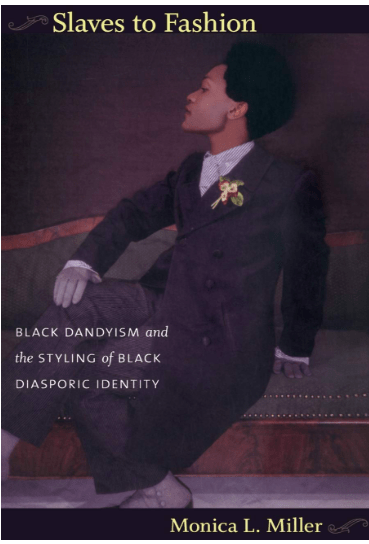
Monica L. Miller’s Slaves to Fashion is an insightful and academically rich exploration of Black dandyism and its role in the cultural and political identity of the Black diaspora. This book is essential for fashion stylists who are interested in the intersection of fashion, history, and identity, particularly for understanding how clothing can serve as both personal expression and political statement within the context of Black experiences across the world.
1. Black Dandyism: Style as Resistance and Identity Formation
Miller’s main thesis is that Black dandyism—marked by elegant, carefully curated, and often flamboyant clothing—emerged as a way for Black men to assert their individuality and humanity in the face of racial oppression. The book traces the history of Black dandyism from the 18th century to the present, showing how fashion has been used as a form of resistance against racial stereotypes and as a means of shaping a Black diasporic identity.
For a fashion stylist, this concept is powerful. Clothing is not merely about aesthetics; it has been used historically to make statements about one’s social status, cultural pride, and political views. Understanding this connection helps stylists frame their work beyond trends and seasonality, emphasizing how clothing choices can communicate deeper messages about identity and empowerment, especially when working with clients from the African diaspora.
2. Key Aesthetic Principles of Black Dandyism
Throughout the book, Miller highlights recurring aesthetic choices that characterize Black dandyism. These principles are invaluable for a fashion stylist looking to draw inspiration from this tradition:
- Elegance and Refined Tailoring: The Black dandy is known for sharp, tailored suits and carefully selected accessories. The attention to detail is key. Stylists can adopt this principle by ensuring that their clients’ garments are impeccably fitted and finished with thoughtful accessories like pocket squares, watches, or hats. The aesthetic of refinement speaks to a larger cultural context, where sartorial precision is a form of pride and self-determination.
- Bold Use of Color and Textures: While elegance and tailoring are central, Black dandies often incorporate vibrant colors and textures that challenge traditional Eurocentric norms of fashion. For stylists, this offers a creative opportunity to experiment with mixing colors and patterns that reflect both individuality and cultural heritage. Incorporating bold color schemes can create powerful visual statements that align with the dandy tradition of standing out and asserting one’s identity.
- Subversion of Norms: The Black dandy’s style often involves subtle (or not so subtle) subversion of fashion norms, using traditionally European styles but giving them a twist—whether through the use of unexpected fabrics, playful accessories, or unconventional color combinations. This encourages stylists to think about fashion as a dialogue between tradition and innovation, where breaking the rules is not just accepted, but celebrated. Modern styling can draw from this tradition by combining classic tailoring with avant-garde or Afrocentric elements, paying homage to heritage while pushing the boundaries of contemporary fashion.
3. The Historical and Cultural Roots of Black Dandyism
Miller provides a thorough historical examination of Black dandyism, beginning with its roots in the 18th century when Black men in colonial societies used European clothing styles to challenge their oppressed status. The book explores figures like Julius Soubise, an 18th-century Black dandy in Britain, and later, cultural figures like W.E.B. Du Bois and Alain Locke during the Harlem Renaissance, who embraced elegant dress as part of their intellectual and cultural activism.
For stylists, this historical context is crucial. Understanding the origins of Black dandyism deepens the appreciation of the choices made by contemporary Black figures in fashion, music, and culture. This knowledge allows stylists to connect the dots between past and present fashion trends and to see how historical elements can be reimagined for modern clients. For instance, tailoring decisions that reference historical silhouettes, or the use of specific accessories like top hats or walking canes, can be integrated into modern outfits to evoke a sense of timelessness and cultural resonance.
4. Fashion as a Political Statement
One of the book’s strongest contributions is its exploration of fashion as a tool for political expression. Miller highlights how Black dandies throughout history used fashion to counteract the negative stereotypes of Blackness perpetuated in white-dominated societies. By dressing with elegance, intelligence, and individuality, Black dandies took control of their public image, challenging racist ideas that sought to reduce them to caricatures.
For a stylist, this idea is incredibly relevant, especially when working with clients who wish to project power, confidence, and autonomy. Fashion, in this sense, is not only a personal statement but a political one. Whether styling a celebrity, influencer, or everyday person, a stylist should be conscious of how certain choices (from clothing to accessories) can communicate messages of resistance, empowerment, and pride in one’s heritage.
5. Contemporary Black Dandyism: From Harlem to Hip-Hop
In the latter part of the book, Miller examines how Black dandyism has evolved and re-emerged in contemporary culture, particularly in the world of music, fashion, and visual art. She discusses figures like André 3000, Jidenna, and Janelle Monáe, whose fashion choices draw on the principles of Black dandyism while updating them for the 21st century.
For stylists working in today’s fashion landscape, these contemporary examples offer rich material. Black dandyism today often involves blending high fashion with streetwear, combining Afrocentric elements with global trends. For example, stylists can play with traditional African fabrics in modern suit designs, or mix urban streetwear elements with tailored looks to create a sense of layered identity — a blend of tradition and innovation that resonates with modern Black culture.
6. Gender and Fluidity in Black Dandyism
While dandyism has historically been associated with men, Miller’s book also addresses how the aesthetic crosses gender boundaries. Modern Black dandies, particularly figures like Janelle Monáe, challenge traditional gender norms by incorporating masculine tailoring into their wardrobes while still embracing fluidity and femininity.
For a stylist, this provides valuable inspiration when working with clients who are looking to push the boundaries of gender in fashion. The book’s exploration of gender fluidity in Black dandyism encourages stylists to embrace non-binary aesthetics, combining traditionally masculine and feminine elements to create looks that challenge conventional expectations and celebrate the fluidity of identity.
7. Practical Lessons for Stylists
Overall, Slaves to Fashion offers several practical takeaways for fashion stylists:
- Attention to Detail: Whether it’s the fit of a suit or the choice of accessories, Black dandyism emphasizes precision. Stylists should prioritize tailored, well-crafted pieces that speak to refinement.
- Bold Creativity: Don’t be afraid to mix bold colors, patterns, and textures. Black dandyism thrives on individuality and subversion.
- Cultural Awareness: Every piece of clothing tells a story. For stylists, understanding the cultural significance of different fashion elements is key to creating looks that are not only visually stunning but also meaningful.
- Fluidity and Innovation: Be open to crossing boundaries, whether between genres of fashion or traditional gender norms. Contemporary Black dandyism is fluid, and today’s stylist should be equally flexible in embracing diverse influences.
Conclusion
Monica L. Miller’s Slaves to Fashion is a must-read for fashion stylists seeking to understand the deep historical, cultural, and political significance of Black dandyism. The book offers a comprehensive look at how Black men and women have used fashion as a tool of resistance, identity formation, and cultural pride over centuries. For stylists, this knowledge serves as both inspiration and a reminder that fashion is far more than just clothing—it is a reflection of history, culture, and the ongoing struggle for visibility and respect.
Discover more from Chaud: The Magazine
Subscribe to get the latest posts sent to your email.
 Chaud: The Magazine
One thought on “Book Review: Monica L. Miller’s Slaves to Fashion: Black Dandyism and the Styling of Black Diasporic Identity – A Brief for Stylists”